
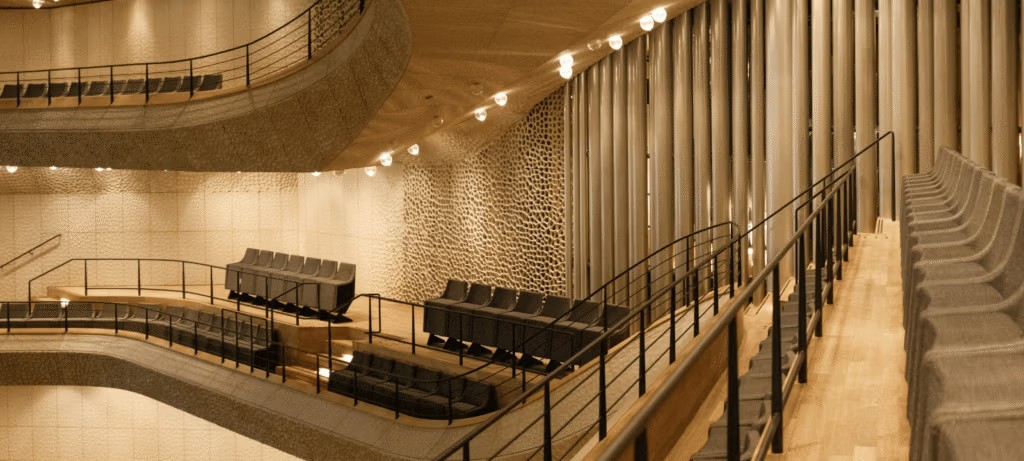
Rethinking Acoustic Solutions with MLT Laser Technology
MLT laser systems are used wherever acoustics and aesthetics intersect – from wall and ceiling panels in offices, conference rooms, and public buildings to new construction and renovation projects, as well as architectural interior design applications.
They are also widely used in automotive and aerospace sound absorption solutions, as well as in custom OEM applications for furniture and systems manufacturers.
Whether wood-based panels, MDF, HPL, composite materials, or technical nonwovens, MLT laser systems enable micro- and macro-perforations precisely tailored to acoustic performance targets, design requirements, and industrial production speeds.
Thanks to digital control, hole diameter, spacing, and patterns can be precisely adapted to the required sound absorption class. The result is optimized acoustic performance, clean cut edges without tear-out, and maximum design flexibility.
Typical Applications of Laser Perforation for Acoustic Panels
Wall and ceiling panels for offices, conference rooms, and public buildings
Acoustic ceiling modules for new construction and renovation projects
Architectural interior design panels (retail, exhibitions, and fit-out projects)
Acoustic solutions for commercial and residential environments
Sound absorption applications in automotive and aerospace industries
Custom OEM solutions for furniture and systems manufacturers
Wand- und Deckenpaneele
Für Büros, Konferenzräume und öffentliche Gebäude
Akustikdecken-Module
Für Neubau- und Sanierungsprojekte
Designpaneele im Innenausbau
Für Architektur, Laden- und Messebau
Akustiklösungen
Im Objekt- und Wohnbereich
Schallabsorption
Im Fahrzeugbau und der Luftfahrt
Individuelle OEM-Lösungen
Für Möbel- und Systemhersteller
Benefits of MLT Laser Perforation for Acoustic Panels
Precise hole geometries for optimal acoustics
Clean edges without mechanical stress
Design freedom
Cost-effective series production
Learn more ➔
Stable processes, short setup times, and high repeatability ensure economical production even with high product variability.
Easy integration into existing production lines
Learn more ➔
MLT laser systems integrate seamlessly into existing manufacturing environments – either inline or as standalone units.
MLT Laser Systems for Acoustic Panel Perforation
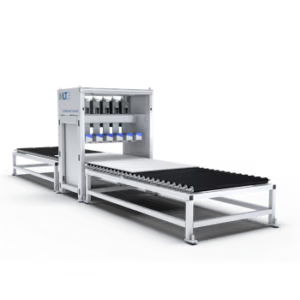
Laser Perforation of Acoustic Panels with MLT
Would you like to produce acoustic panels more efficiently or realize new design possibilities?
Get in touch with us. We will analyze your application, define the optimal laser strategy, and develop a system precisely tailored to your production process.
Frequently Asked Questions (FAQs)
Why is laser perforation used for acoustic panels?
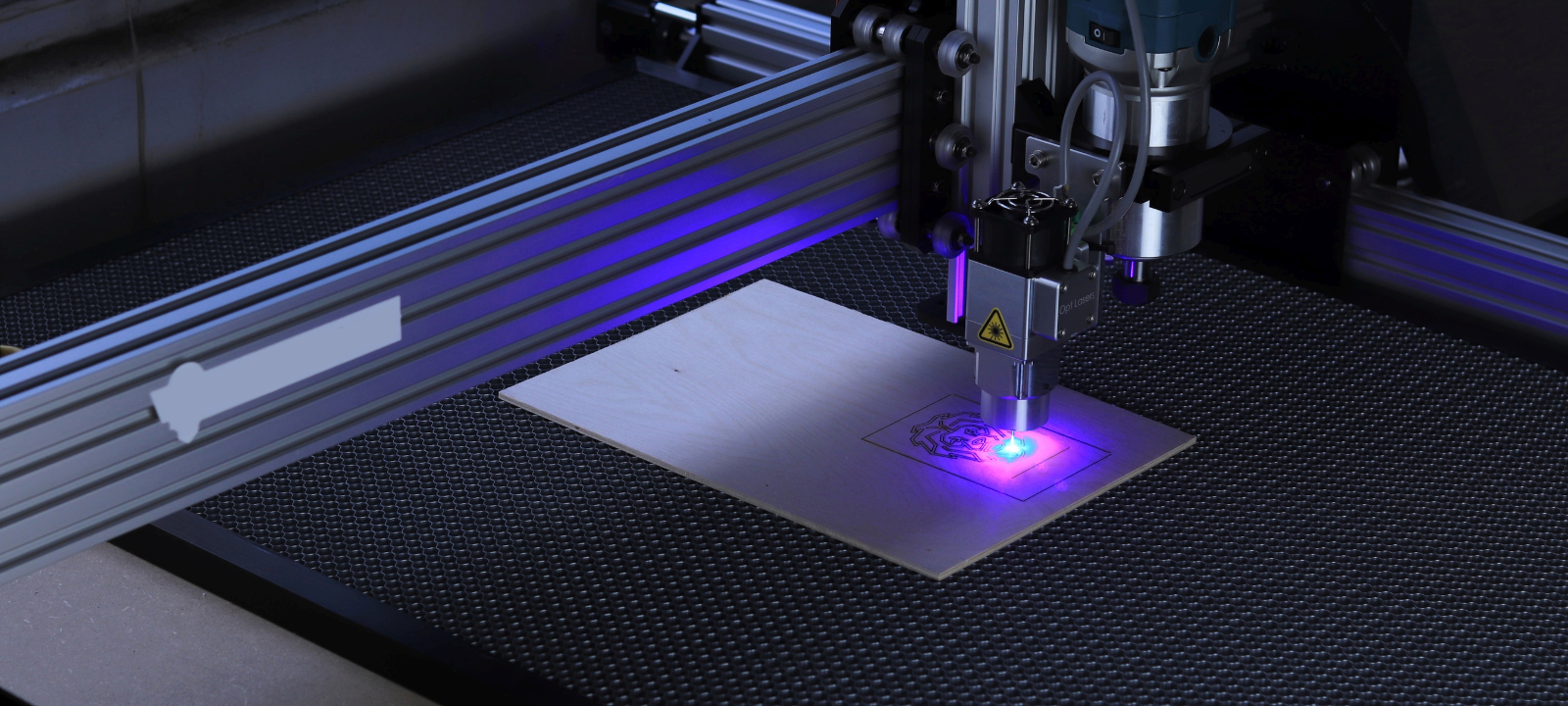
Laser perforation for acoustic panels is a contactless manufacturing process in which defined micro- or macro-perforations are created using a laser beam.
The goal is to precisely control the open-area ratio of the material, thereby tuning sound absorption performance while maintaining full design flexibility and consistent repeatability.
How does laser perforation affect sound absorption?
Acoustic performance depends directly on hole diameter, spacing, pattern geometry, and overall open-area ratio.
Laser perforation allows these parameters to be precisely defined and digitally reproduced, enabling panels to be engineered for specific absorption classes or frequency-dependent acoustic requirements in offices, conference rooms, and public spaces.
Which materials are suitable for laser perforation of acoustic panels?
MLT laser systems process a wide range of materials, including:
- Wood fiber boards
- MDF
- HPL laminates
- Composite materials
- Coated and decorative surfaces
Sensitive or multilayer materials particularly benefit from contactless processing, as no mechanical stress is applied and no tear-out occurs.
What hole sizes are possible with laser perforation?
Depending on material and application requirements, both micro-perforations and larger hole diameters are possible.
Typical applications range from 5.0 mm structures to several millimeters in diameter. Final specifications depend on acoustic targets, material thickness, and design requirements.
Why is laser perforation more economical than drilling or punching?
Compared to mechanical processes, laser perforation offers several economic advantages:
- No tool wear
- No tooling costs for design changes
- Short setup times
- High repeatability
- Easy product variation
This makes laser perforation particularly cost-effective for acoustic panels with frequent design changes or medium production volumes.
Can custom designs and patterns be realized?
Yes. Laser perforation enables fully customizable hole patterns—from functional acoustic grids to architectural design motifs.
Perforation zones can also be varied within a single panel, allowing precise balancing of acoustic performance and visual design.
Is laser perforation suitable for series production?
Absolutely. MLT laser systems are designed for continuous industrial production.
Stable process parameters, digital control, and automated material handling ensure scalable manufacturing with consistently high quality – even at high volumes and product variety.
Can laser systems be integrated into existing production lines?
Yes. Integration is possible both inline within existing production lines and as standalone stations.
Automation, material handling, extraction systems, and process monitoring are adapted individually to the production environment, ensuring seamless integration without disrupting cycle times.
Is laser perforation of acoustic panels sustainable?
Yes. Contactless processing eliminates the need for mechanical tools and reduces wear-related waste.
Material is processed with high precision, minimizing scrap and optimizing resource efficiency. The process is clean, repeatable, and designed for long-term sustainable manufacturing.