
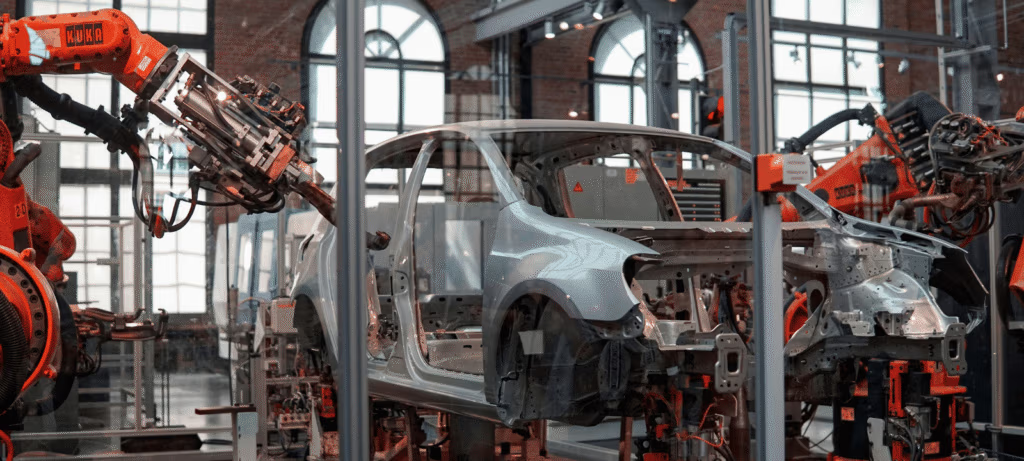

MLT Laser Technology for Demanding Automotive Applications
In automotive manufacturing, cycle times, repeatability, and absolute process reliability are critical success factors. At the same time, requirements for functionality, lightweight design, design flexibility, and traceability continue to increase.
Meeting these challenges requires not only advanced technology but also comprehensive support and expert consultation to ensure long-term production success.
MLT develops and integrates laser systems specifically designed for automotive applications. These include precision micro-perforation, high-accuracy cutting and contouring of technical materials, and seamless integration into highly automated production lines – all while delivering 100% reproducible results, even in high-volume manufacturing environments.
The result is stable production processes, reduced scrap rates, and cost-efficient manufacturing, even for complex geometries and sensitive materials.
Typical Automotive Applications
Laser Marking for Maximum Anti-Counterfeiting Protection
Laser marking has become a standard technology in modern vehicles and automotive components. One particularly demanding application is the processing of retroreflective license plate films, where country-specific security logos are precisely integrated into the multilayer film structure.
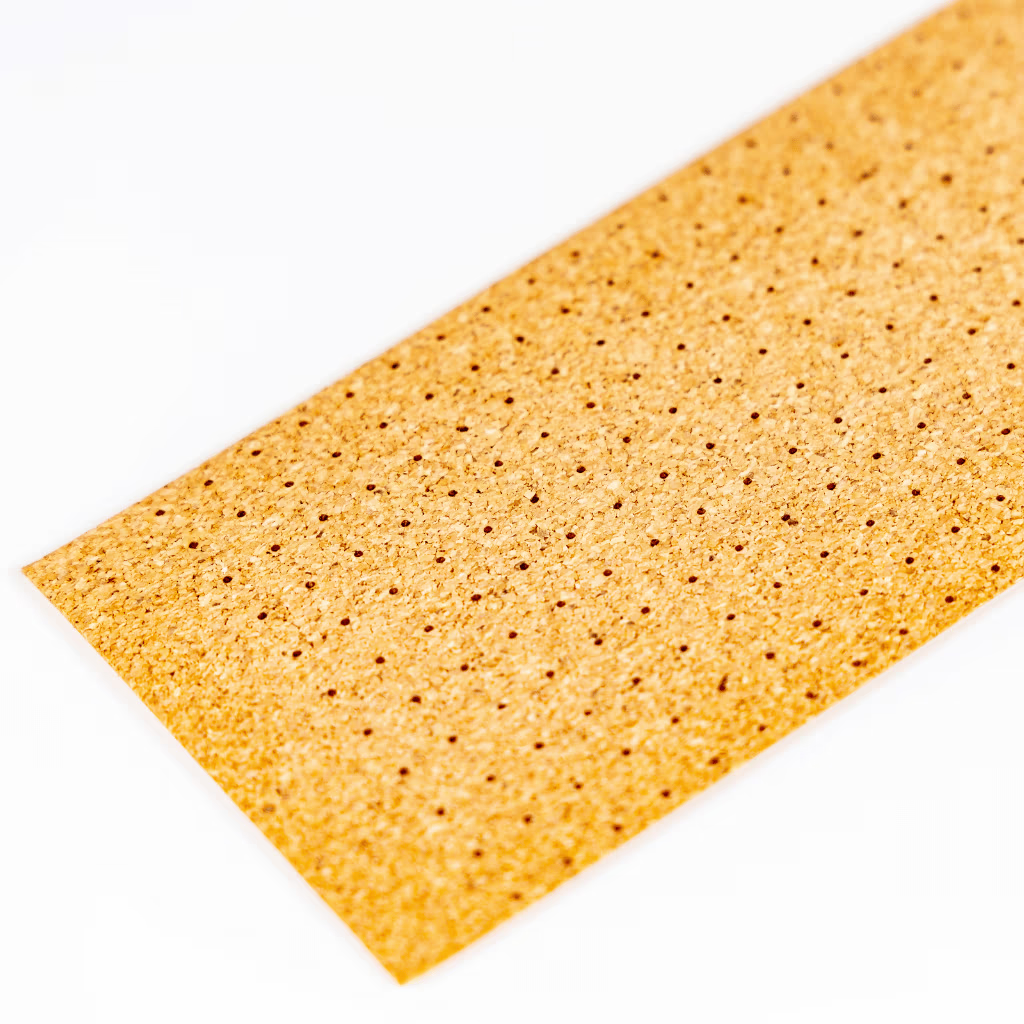
Laser Perforation for Insulation Tapes
Insulation tapes used in automotive alternators must withstand demanding thermal and mechanical loads. Laser perforation enables hole diameters up to ten times smaller than those achievable with conventional mechanical processes, significantly reducing moisture absorption.
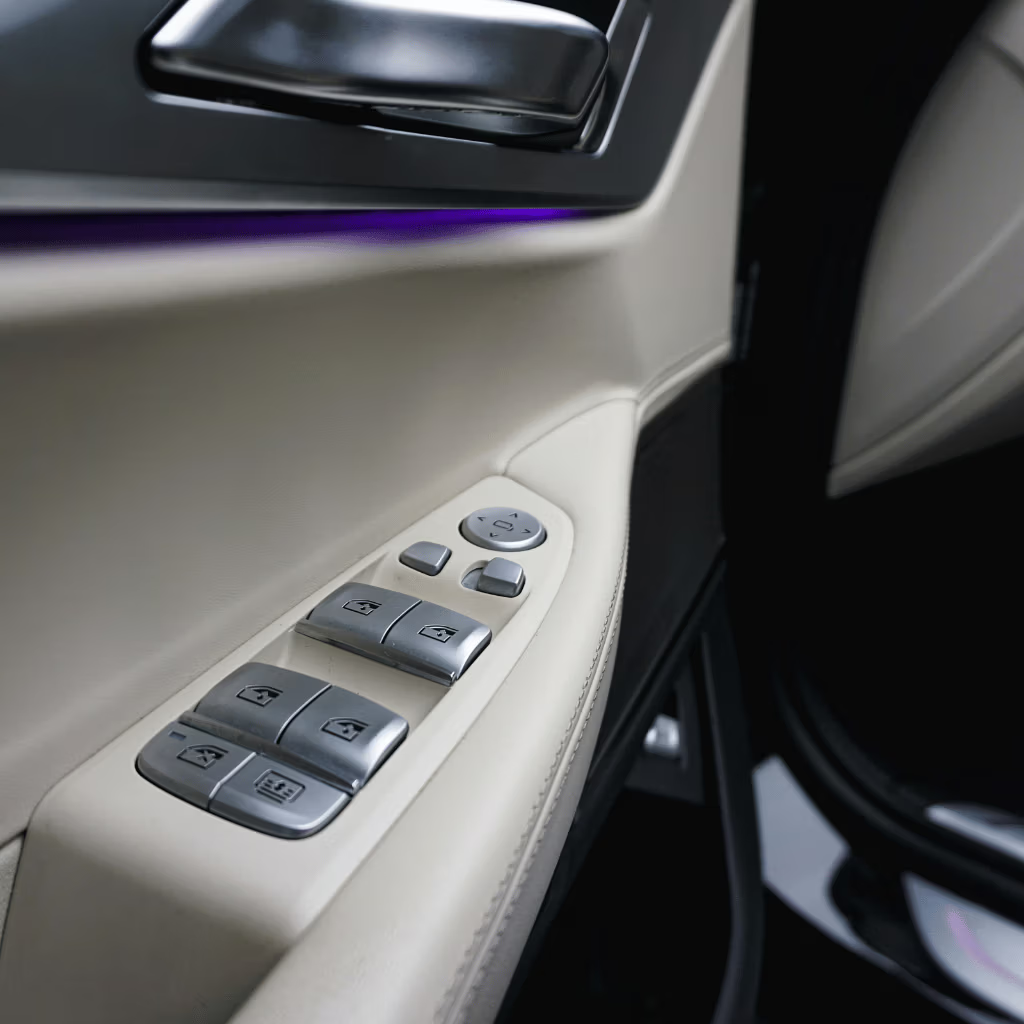
Laser Perforation of Interior Components
Leather, wood laminates, and similar interior materials can be micro-perforated with exceptional precision. The objective is to create perforation patterns that remain virtually invisible to vehicle occupants while delivering the required functional performance and premium appearance.
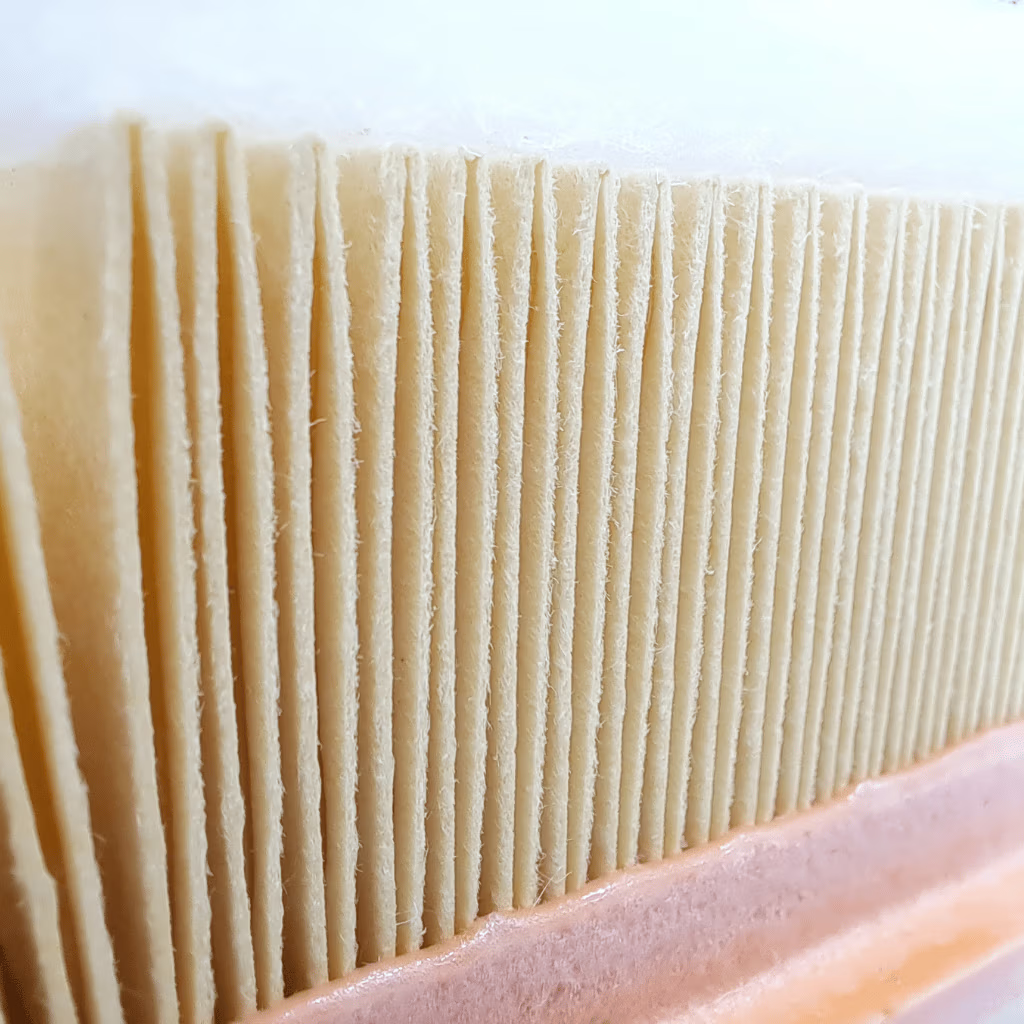
Laser Cutting for Filtration Systems
Laser cutting is a proven technology for manufacturing air filters, cabin air filters, and other filtration media used in automotive applications. Key benefits include maximum cutting accuracy, clean sealed edges without secondary processing, and complete flexibility in contour design.
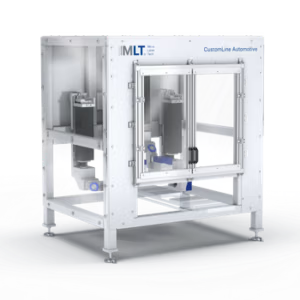
Benefits of MLT Laser Systems for the Automotive Industry
Customized solutions
Maximum process stability
Contactless processing
Flexible integration
Learn more ➔
MLT laser systems integrate seamlessly and support robotics, material handling systems and quality inspection equipment.
Material versatility
Learn more ➔
Plastics, textiles, and more: Our laser sources and wavelengths are precisely matched to the material being processed.
MLT Laser Systems for Automotive Manufacturing
Ready for the Next Innovation Step with MLT?
Whether you manufacture interior components, functional parts, or safety-critical products, MLT provides laser systems for the automotive industry that combine precision, reliability, and cost efficiency.
Let's explore together how your production processes can be optimized or completely reimagined with laser technology.
Frequently Asked Questions (FAQs)
What are laser systems for the automotive industry?
Laser systems for the automotive industry are industrial laser solutions specifically developed for the requirements of OEMs and automotive suppliers.
Typical applications include laser marking, micro-perforation, laser cutting, and material processing within highly automated, high-volume production environments with demanding cycle-time requirements.
Why are laser systems so important in automotive manufacturing?
Automotive production requires maximum process reliability, repeatability, and traceability.
Laser processes are contactless, wear-free, and highly precise, making them ideal for safety-critical components, functional surfaces, and complex geometries while maintaining low unit costs.
Which applications can laser systems cover in automotive production?
Typical applications include:
- Anti-counterfeiting laser marking of components and license plate films
- Micro-perforation of interior materials for seat ventilation systems
- Laser perforation of technical insulation tapes
- Laser cutting of filter media, textiles, and plastics
- Structuring and contouring of functional films
- Cutting and converting wire harness wrapping tapes
Where conventional mechanical processes reach their limits, laser technology often delivers decisive advantages.
How do laser systems ensure 100% repeatability in serial production?
Repeatability is achieved through precisely controlled laser sources, stable process management, and integrated quality monitoring.
Modern laser systems for automotive manufacturing are designed for continuous 24/7 operation and deliver consistent results regardless of production volume or operating time.
What advantages does laser perforation offer compared to mechanical methods?
Laser perforation enables significantly smaller and more precise hole diameters—sometimes up to ten times finer than those produced by mechanical processes.
This reduces material stress, minimizes moisture absorption in insulation materials, and enables virtually invisible perforation patterns for automotive interiors.
In addition, laser processing produces clean edges without tool wear.
Which materials can be processed with automotive laser systems?
Typical materials include:
- Technical films
- Plastics
- Composite materials
- Textiles and coated fabrics
- Leather
- Wood laminates
Different laser sources and wavelengths are selected to optimize processing for each specific material.
How can laser systems be integrated into existing production lines?
Modern laser systems are modular by design and support standardized interfaces for robotics, handling systems, and quality-control equipment.
Integration takes place directly inline within existing production processes and can include connectivity for traceability systems and Industry 4.0 manufacturing environments.
Are laser systems cost-effective for high-volume production?
Yes.
Because laser processing eliminates tool wear, tool changes, and much of the setup effort associated with conventional manufacturing methods, downtime is reduced significantly.
This lowers per-part production costs and increases equipment availability – both critical factors in automotive serial production.
What role does laser marking play in anti-counterfeiting and traceability?
Laser markings are permanent, abrasion-resistant, and tamper-proof.
They enable unique identification through serial numbers, machine-readable codes, and optical security features, such as those used in retroreflective license plate films with defined viewing-angle characteristics.
As a result, laser marking supports the highest standards of traceability, product protection, and regulatory compliance.